Building Healthy Communities
A healthy community is one where the social, natural, and built environments influence health-promoting behaviours and support well-being for all. It provides residents with opportunities to access affordable housing, transportation, healthy and nutritious foods, recreation, as well as education and employment. A healthy community is also one where residents have access to medical and social services, clean air and water, a safe environment, and an inclusive, socially cohesive atmosphere. In doing so, healthy communities foster living, working, learning, and playing conditions that can reduce chronic diseases, injuries, and harms, as well as enhance the population’s physical and mental health across the life course.
A focus on building healthy communities is not just a goal, but also a different way of working together. It requires intersectoral collaboration, including between public health and municipal partners.
This webpage highlights how the Eastern Ontario Health Unit (EOHU) supports municipalities and outlines opportunities for collaboration and engagement to help ensure that today's decisions contribute to a healthier future for everyone in the community.
On this page:
- The EOHU’s approach to building healthy communities
- The role of the EOHU in the municipal setting
- What municipalities can do
- Other ways municipalities collaborate with public health to build healthy communities
- Contact us
The EOHU’s approach to building healthy communities
The EOHU works with municipal partners to support healthy communities across the United Counties of Stormont, Dundas and Glengarry, the United Counties of Prescott-Russell, and the City of Cornwall. Our mission is to promote wellness, prevent and protect against disease and injury, and advocate for healthier communities using a comprehensive and collaborative approach.
The EOHU applies midstream and upstream interventions to address the social and structural determinants of health, or the “causes of the causes” of health inequities. These interventions can have overlapping and complementing activities which may address multiple risk and protective factors, issues and challenges, and a variety of health topics – hence their comprehensive nature.
By working with municipalities on upstream interventions to improve population health, we can increase our overall impact on community well-being, ease pressure on the health care system downstream, and make healthy choices more accessible and achievable for individuals.
The role of the EOHU in the municipal setting
In the municipal setting, public health expertise is most often supportive. It can facilitate municipal action to achieve a better standard of living at a local level.
The EOHU can support local municipalities by:
- Providing an in-depth understanding of the social determinants of health, identifying health inequities, and suggesting practical solutions that are adapted to the local realities.
- Sharing useful local data and evidence relevant to community priorities to support planning endeavours and the development of local healthy public policy.
- Bringing together community partners and community members to work on local priorities, share resources, and co-create equitable and sustainable programs and policies that improve quality of life.
- Using core public health skills to provide backbone leadership and support for well-being initiatives led by others.
- Facilitating system coordination so that community members know what services are available, can navigate the system easily, and have equitable access.
Municipalities have access to levers for change that are directly linked to the conditions for healthy communities (e.g., land use planning, infrastructure management, providing essential services, etc.). As such, sustainable change must be municipally driven.
What municipalities can do
In this section, we have highlighted opportunities for municipal action that are aligned with current municipal priorities which are shared with public health. Though not an exhaustive list, progress in any of these areas will help build healthy and thriving communities where people feel included and supported, and where everyone can attain their full potential for health and well-being throughout the life course.
Access local data
To learn more about the health status of our community, consult:
- EOHU Health Statistics and Surveillance Reports
- Social Determinants of Health for the Eastern Ontario Health Unit Population
- Mental Health in Eastern Ontario
- Household Food Insecurity in Eastern Ontario
Contact us for any additional data or information requests.
Address housing affordability, homelessness and food insecurity
Advocate for and adopt income-based solutions that address the root cause of housing precarity and food insecurity so that all residents can afford their basic needs including shelter and food. Through land use planning, investment and policy advocacy, ensure an adequate supply of affordable, safe and appropriate housing to allow households to afford other necessities (food, clothing, etc.) (1; 2).
Spotlight on the Data:
- 1 in 4 households (25.7%) in the EOHU region experienced a level of household food insecurity at least once in a 12-month period (2023-2024) (1).
- Access more local data here.
Resources:
- Household Food Insecurity in Eastern Ontario
- Municipal Land Use Planning Policies that Promote Equitable and Sustainable Food Systems
- A New Direction: A Framework for Homelessness Prevention – Operationalizes the policies and practices necessary to successfully prevent homelessness.
Enhance recreation and active living opportunities
Expand the availability of low- or no-cost programs and facilities and increase access to existing offerings to make it easier for all community members to engage in physical activity. Participating in meaningful recreation experiences fosters individual well-being, the well-being of the natural and built environments, and community well-being (3).
Spotlight on the Data:
- 22.6% of adults 18 years of age or older in the EOHU region self-report no physical activity (4).
- Access more local data here.
Resources:
- Framework for Recreation in Canada – A guiding document for public recreation providers
- Parks for All: An Action Plan for Canada’s Parks Community
- Municipal Guide for Disability Inclusion in Recreation and Physical Activity – Provides strategies to make sure persons with disabilities are included in programs and activities
- Athletics Canada - Safe Sport
- Sport for Life – Resources on developing physical literacy and delivering quality sport
- 2025 Position Statement on Active Outdoor Play
- Measuring the Economic Impact of Sport, Physical Activity and Recreation in Canada
- Active transportation – Any human-powered transportation (e.g., walking, cycling, using a wheelchair) used to get from one location to another. It can have a significant impact on physical, mental, and social health, the environment, and the economy.
- The Centre for Active Transportation
- WALK Friendly
- Share the Road Cycling Coalition – Bicycle-friendly communities
- 8-80 Cities – Resources to create healthier, more equitable, and sustainable cities for all people
Create age-friendly communities
An age-friendly community responds to both the opportunities and challenges of an aging population by creating physical and social environments that support independent and active living and enable older people to continue contributing to all aspects of community life (5).
Spotlight on the Data:
- In 2022, the projected population growth in the EOHU region for those 65 years of age and older was a 30.9% increase by 2030 and a 47.9% increase by 2040 (6).
- Access more local data here.
Resources:
- Ontario Age-Friendly Community – A planning guide for municipalities and community organizations
- Age- and Dementia-Inclusive Neighbourhood Design Guidelines and accompanying learning modules – Offer planning and design strategies to improve well-being for older adults, with a specific consideration for people living with dementia.
Promote population mental health and support people affected by substance use
Foster an environment (via policies, programs, practices and partnerships) that promotes mental health, well-being and healthy decision-making, and reduces the harms associated with substance use for people who use substances, their families, friends, and communities (7).
Spotlight on the Data:
- The rate of emergency department visits for mental health and substance use in the EOHU region (2,473.71 visits per 100,000 population) is significantly higher than the provincial rate (1,914.60 visits per 100,000 population) (8).
- Access more local data here.
Resources:
- Substance Use Health
- Mental Health in Eastern Ontario
- The Municipal Role in Mental Health – Describes the municipal role in harm reduction and mental well-being and provides recommendations for action.
- Community Safety and Well-Being Planning Framework – An opportunity for inter-sectoral collaboration, including with public health, to support the creation of communities that are safe and that will improve quality of life for all.
Facilitate access to care (primary care and health care)
Advocate for the local health interests and needs of community members at the provincial table and attract and retain primary care providers through locally funded incentives (9).
Spotlight on the Data:
- The percentage of the total population that is unattached to primary care in the Archipel Ontario Health Team (OHT) region is 10.9% and in the Great River OHT region is 16.9% (10).
- Note 1: The OHT definition of attached: “A patient is considered attached if they meet one of the following criteria: (1) the patient sees a primary care physician and has signed an enrolment form (2) the patient lives in an area where everyone can get primary care (3) the patient has been receiving care at a CHC (4) the patient is on the NP-led clinic list (5) they are consistently receiving comprehensive primary care from a fee-for-service physician” (10).
- Note 2: The Archipel OHT and Great River OHT catchment areas are not an exact match to the EOHU region. Data should be interpreted with caution.
- Access more local data here.
Resources:
- For Municipal Partners:
- A Compendium of Municipal Health Activities and Recommendations – A Companion to AMO’s “Partners for a Healthy Ontario: A Check-up on the Municipal Role in Health” Discussion Paper
- For Community Members:
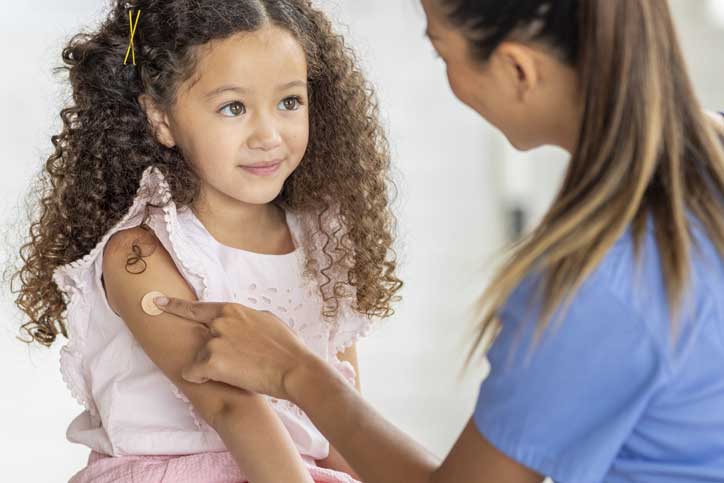
- Immunization – Publicly funded vaccines provided to EOHU residents without a primary care provider or with a primary care provider who does not provide immunizations
- Cancer Screening Program – For EOHU residents who do not have a primary care provider
- Nutrition Services – List of locations within the EOHU region that offer the services of a registered dietitian
- Health Care Connect – To find a family doctor or nurse practitioner.
- Health 811 – To connect with a registered nurse and obtain health advice
- 9-8-8 – Suicide crisis helpline
- Local Ontario Health Teams (OHTs) – Great River OHT and Archipel OHT
- Virtual Triage and Assessment Centre (VTAC) - Accessible health care in Prescott-Russell
- The East Region Virtual Care Clinic (ERVCC)
Other ways municipalities collaborate with public health to build healthy communities
Contact Us
The health promotion team can be reached by phone at 613-933-1375 or 1-800-267-7120 or by email at healthpromosante@eohu.ca.
References
1. Eastern Ontario Health Unit. Household Food Insecurity in Eastern Ontario. [Online] 2025. [Cited: January 9, 2026.] https://eohu.ca/en/my-health/household-food-insecurity-in-eastern-ontario.
2. Gaetz, Stephen and Dej, Erin. A New Direction: A Framework for Homelessness Prevention. Homeless Hub. [Online] 2017. [Cited: January 9, 2026.]
3. Canadian Parks and Recreation Association. Framework for Recreation in Canada. Canadian Parks and Recreation Association. [Online] March 2024. [Cited: January 9, 2026.] https://www.cpra.ca/framework.
4. Ontario Agency of Health Protection and Promotion (Public Health Ontario). Snapshots: physical activity snapshot: self-reported no adult physical activity minutes>>Age standardized rate (both sexes)>>2021. [Online] February 2025, 2024. [Cited: January 13, 2026.] https://www.publichealthontario.ca/en/Data-and-Analysis/Health-Behaviours/Physical-Activity.
5. Government of Ontario. Creating a more inclusive Ontario: age-friendly community planning guide for municipalities and community organizations. Government of Ontario. [Online] 2021. [Cited: January 9, 2026.] https://www.ontario.ca/page/creating-more-inclusive-ontario-age-friendly-community-planning-guide-municipalities-and-community.
6. Eastern Ontario Health Unit. Health Indicators. Eastern Ontario Health Unit. [Online] January 2023. [Cited: January 9, 2026.] https://eohu.ca/en/my-health/health-indicators.
7. Hammond, Marcus R., et al. The Municipal Role in Mental Health. University of Toronto. [Online] June 6, 2025. [Cited: January 9, 2026.] https://utoronto.scholaris.ca/items/ab2e4c3d-7c2e-4c6f-8804-2907d3fc5442.
8. Ontario Agency for Health Protection and Promotion (Public Health Ontario). Mental health and substance use emergency department visits health equity snapshot. [Online] January 19, 2024. [Cited: January 9, 2026.] https://www.publichealthontario.ca/en/Data-and-Analysis/Health-Equity/Mental-Health-ER-Visits.
9. Association of Municipalities of Ontario. Partners for a Healthy Ontario: A Check-up on the Municipal Role for Health. [Online] 2019. [Cited: January 9, 2026.] https://www.amo.on.ca/sites/default/files/assets/DOCUMENTS/Reports/2019/PartnersforaHealthyOntario20190118.pdf.
10. Ontario Health Teams Dashboard. Primary Care Action Table Data Package. 2025.